Core Advantages
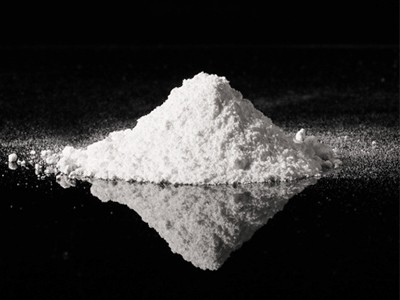
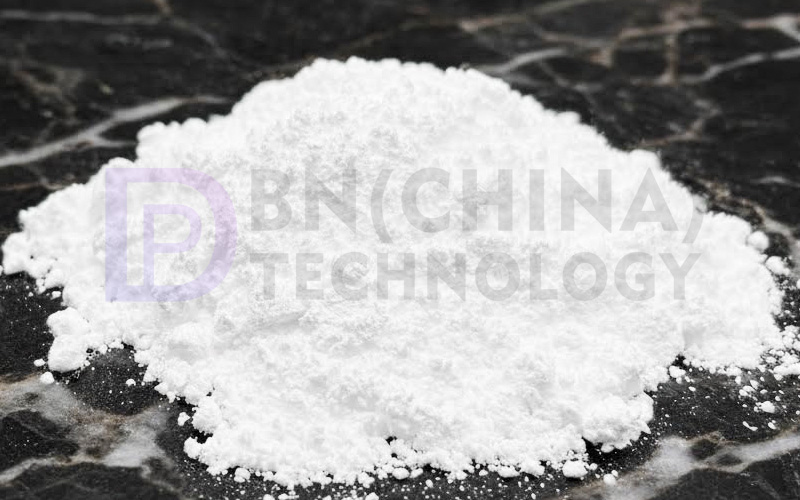
Dubbed “white graphite,” it combines graphene's thermal conductivity with ceramic insulation properties.
Electronics and Electrical Applications
In the electronics industry, hexagonal boron nitride (h-BN) has become a critical material. Data from 2024 indicates its application share in electronics has exceeded 35%. As a core material for semiconductor packaging, h-BN simultaneously addresses dual requirements for thermal management and electrical insulation protection.
Its high thermal conductivity and superior electrical insulation make it an ideal thermal interface material. In high-frequency, high-heat scenarios like 5G base stations and electric vehicles, h-BN composites exhibit nearly four times the thermal conductivity of pure polymer matrices.
Aerospace and High-Temperature Engineering
In aerospace, h-BN is used to manufacture thermal insulation layers for rocket nozzles, where its low thermal expansion coefficient and thermal shock resistance demonstrate outstanding performance. In nuclear engineering, h-BN serves as a neutron absorber material for safety control in nuclear reactors.
Lubrication and Protection
h-BN is known as a “high-temperature lubricant,” capable of operating up to 900°C in oxidizing atmospheres and even reaching 2000°C under vacuum conditions. With moderate hardness (between molybdenum disulfide and diamond), high load-bearing capacity, and exceptional chemical inertness, it is non-toxic, environmentally friendly, and an ideal green lubricant additive.
Environmental and Biomedical Applications
Porous h-BN possesses a high specific surface area, exhibiting strong adsorption capacity for pollutants such as hydrocarbons and heavy metal ions. It demonstrates significant potential in oil-water separation and wastewater purification. Its excellent biocompatibility makes it an ideal choice for drug delivery materials.
Frontier Research Directions
Recent breakthroughs include:
Bandgap Tuning: A Chinese Academy of Sciences team successfully achieved bandgap tuning in hexagonal boron nitride nanoribbons, offering novel approaches for optoelectronic devices.
Composite Materials: The Lanzhou Institute of Chemical Physics developed a “tube-sheet” bridged structure, significantly enhancing thermal conductivity and electromagnetic wave absorption properties.
Surface Modification: Surface modifications using amino and carboxyl groups improved h-BN dispersion and interfacial compatibility within polymer matrices.