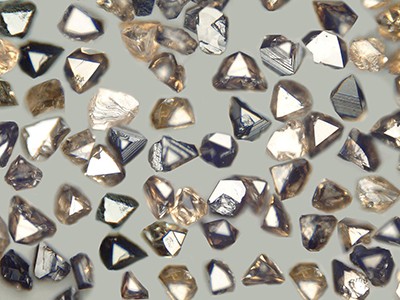
When many people hear the term “lab-grown diamonds,” their first reaction is that they’re “fake.” But that’s not the case. Lab-grown diamonds and natural diamonds have exactly the same chemical composition—both are crystalline structures made of carbon. The only difference is that one is mined from the ground, while the other is grown in a laboratory.

Let’s talk about a few tangible advantages.
First, they’re affordable. This is the most obvious benefit. For the same carat weight and quality, lab-grown diamonds cost roughly one-third to one-tenth the price of natural diamonds. The money you save is enough to buy several more pieces of jewelry. For everyday wear, this truly offers excellent value for the price.
Second, their quality is more consistent. Natural diamonds are somewhat a matter of “luck”—a yellowish tint or internal inclusions are quite common. With lab-grown diamonds, conditions can be controlled during the growth process, so virtually any desired color or clarity can be achieved. D-color and VVS clarity—which are top-tier in natural diamonds—are standard specifications for lab-grown diamonds.
Third, they’re environmentally friendly. Many people aren’t aware of this. Mining a diamond requires moving large amounts of earth and rock, which damages the surface ecosystem. While lab-grown diamonds do involve some carbon emissions and energy consumption, the overall environmental impact is much lower. Younger consumers are increasingly concerned about this, and lab-grown diamonds perfectly address this need.
Let’s talk about applications—it’s not just about making rings.
Jewelry is the largest market: wedding rings, necklaces, and earrings are perfectly suitable for everyday wear, and you can’t tell the difference with the naked eye.
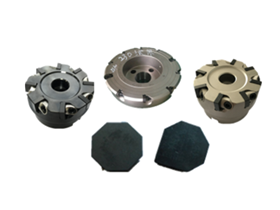
The industrial sector is where lab-grown diamonds truly shine as a “hidden ace.” Diamonds are the hardest material in nature, making them extremely efficient for use in cutting discs, grinding wheels, and drilling bits. Lab-grown diamonds can be produced in very large sizes with high purity, making them even more suitable for industrial applications than natural diamonds.
They’re also being used in the tech sector. Diamonds have excellent thermal conductivity, making them ideal for semiconductor heat sinks. Additionally, lab-grown diamonds are being tested for use in optical windows and certain components in quantum computing.
In the medical field, diamond-coated surgical scalpels—which are both sharp and durable—are already being used in certain precision surgeries.
Lab-grown diamonds are not “substitutes” for natural diamonds; they are diamonds in their own right. They are more affordable, offer more consistent quality, are more environmentally friendly, and have a much broader range of applications than most people realize. Rather than getting hung up on whether they’re real or not, it’s better to consider whether they’re actually suitable for your needs.