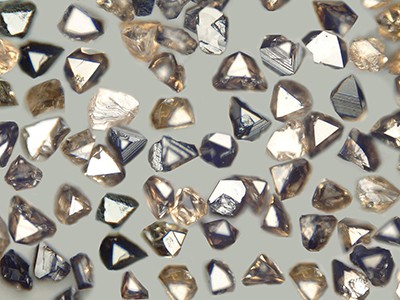
In common industrial grinding scenarios, brown fused alumina has long been the most widely used basic abrasive. It is affordable, readily available, and has been a highly cost-effective choice for grinding ordinary carbon steel and cast iron for many years. However, an increasing number of factories engaged in precision grinding and mass production of hardened steel are replacing some of their brown fused alumina wheels with cubic boron nitride (CBN) grinding wheels. The core reason is not that brown fused alumina is ineffective, but that CBN abrasives deliver a more suitable overall performance when processing high-hardness metals.
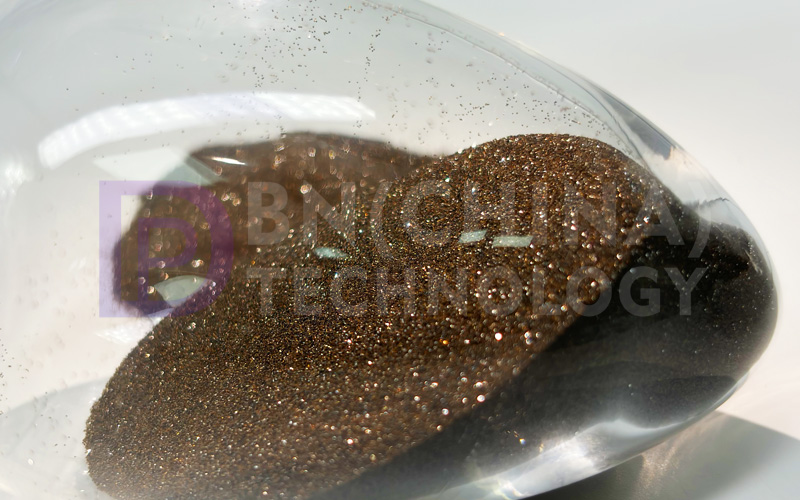
First, let's look at the actual differences in hardness and strength. Brown fused alumina has a Mohs hardness of 9 and a micro-Vickers hardness of approximately 1800-2200 kg/mm². While this is sufficient for grinding ordinary steel, the abrasive grain wears significantly faster when working on hardened steel and high-speed steel with a hardness above HRC 45. The sharp edges blunt quickly, requiring frequent dressing of the grinding wheel. In comparison, CBN abrasives have a micro-Vickers hardness of 3200-4000, second only to diamond. The grains feature higher structural strength, retaining sharp cutting edges for extended periods during wear and eliminating the need for repeated shutdowns for dressing. Many factories grinding bearing rings previously dressed their brown fused alumina wheels every 8 hours. After switching to CBN wheels, the dressing interval can be extended to dozens of hours, drastically reducing downtime.
Next, consider the differences in heat resistance and chemical stability. Brown fused alumina has a melting point of around 2050℃, but in actual grinding operations, when the contact zone temperature exceeds 1000℃, the abrasive grains tend to soften. This causes slippage when grinding hard metals and easily leaves burn marks on the workpiece surface. CBN abrasives, however, do not oxidize below 1300℃ in atmospheric environments and will not react with ferrous metals below 1150℃. When grinding hardened steel, even if the local temperature rises to over 1000℃, the abrasive grains will not soften or adhere to the workpiece material. The finished workpiece surface is far less prone to burns and microcracks, saving considerable effort in subsequent polishing processes.
When compared in real-world grinding applications, their suitable scenarios are clearly defined: brown fused alumina wheels are ideal for rough grinding and edge sharpening of ordinary steel and non-metallic materials, offering low cost and strong versatility. For mass processing of high-hardness workpieces such as hardened steel and die steel, however, CBN grinding wheels achieve a grinding ratio of 3500-5500 — more than ten times that of ordinary brown fused alumina wheels. They provide a longer overall service life and better processing stability during long continuous operations.
Today, many factories do not completely replace brown fused alumina wheels. Instead, they use them in combination based on the hardness and precision requirements of the workpiece. Brown fused alumina is used for rough machining to control costs, while CBN abrasive wheels are adopted for finishing to boost efficiency and precision. In the long run, this approach results in a lower overall processing cost.