Although hexagonal boron nitride (h-BN) and graphite are both layered materials, their properties and applications differ significantly due to differences in atomic composition. With its unique combination of properties,h-BN offers irreplaceable advantages in demanding environments such as high-temperature, insulation, and chemical stability applications.
Differences in Atomic Structure and Fundamental Properties
Graphite consists of layers of pure carbon atoms. Since free electrons exist within these layers, it is a natural conductor with a resistivity of only 10⁻⁴ Ω·cm, while also possessing excellent thermal conductivity and lubricity. However, its chemical stability is relatively weak; it begins to oxidize in air at 400°C, reacts violently at 800°C, and readily reacts with strong oxidizing agents. Furthermore, graphite’s lubrication mechanism relies on the adsorption of gases; in vacuum or high-purity environments, its coefficient of friction increases sharply, limiting its application in specialized scenarios.
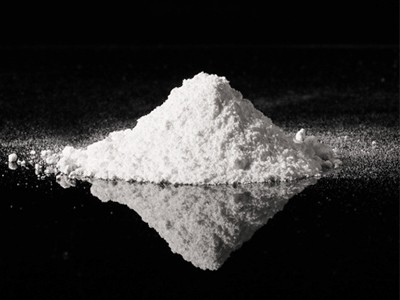
Hexagonal boron nitride (h-BN) features a layered structure formed by alternating boron and nitrogen atoms. With no free electrons within the layers, it is a natural insulator, boasting a resistivity as high as 10¹⁴ Ω·cm and a breakdown voltage five times that of ordinary plastics. It exhibits exceptional chemical stability, resisting corrosion from acids, alkalis, and molten metals (such as aluminum and copper). It remains stable in air up to 900°C and can withstand temperatures of 3,000°C in an inert atmosphere, with a temperature resistance more than three times that of graphite. In terms of lubrication,h-BN does not rely on gas adsorption; it maintains a low coefficient of friction even in vacuum or high-purity environments. Furthermore, its coefficient of thermal expansion is only one-fifth that of aluminum oxide, and it exhibits excellent thermal shock stability.
Differentiation of Application Scenarios
Traditional Applications of Graphite
Due to its electrical conductivity, graphite is widely used in battery conductive agents, electromagnetic shielding materials, and graphite electrodes. Its lubricating properties at room temperature make it suitable for applications dependent on atmospheric conditions, such as mechanical bearings and automotive brake pads. In the refractory materials sector, graphite crucibles and steel furnace linings are only suitable for low-temperature oxidative environments.
Breakthrough Applications of h-BN
High-Temperature Industry: In aluminum alloy die casting,h-BN (h-BN) coatings extend mold life by three times and improve demolding efficiency by 40%, whereas graphite cannot withstand the high temperatures and oxidation involved. In magnesium alloy refining crucibles, the use of h-BN reduces impurity levels to 0.02%, eliminating the carbon contamination caused by graphite.
Electronic Packaging: IGBT modules must simultaneously address heat dissipation and electrical insulation. As a thermally conductive insulating filler,h-BN perfectly eliminates the short-circuit risk caused by graphite’s conductivity; the use ofh-BN in deep-ultraviolet LED substrates extends device lifespan to 100,000 hours—twice that of gallium nitride substrates.
Aerospace: Rocket nozzle insulation must withstand extreme thermal shock. Due to its low coefficient of thermal expansion,h-BN offers far greater stability than graphite, effectively preventing cracking and failure.
Nuclear Industry: As a neutron absorber,h-BN allows for controlled boron content, preventing graphite from interfering with reactor control due to its neutron moderating effect.
H-BN overcomes the inherent limitations of graphite in high-temperature insulation, chemical stability, and vacuum lubrication through structural innovation. As electronic devices evolve toward higher frequencies and temperatures, and as demand for precision increases in sectors such as aerospace and nuclear energy, h-BN is transitioning from a specialty material to a fundamental industrial raw material. With a market growth rate exceeding 15% for five consecutive years, it has become a key enabler of advanced manufacturing.