Anyone who has worked in die casting, glass molding, or metal forging knows that choosing the wrong release agent can make the job incredibly difficult—it causes sticking to the mold, black spots, rapid mold wear, and residue on the product surface. In recent years, more and more high-temperature release agents have begun using h-BN powder as their core ingredient, and for good reason.
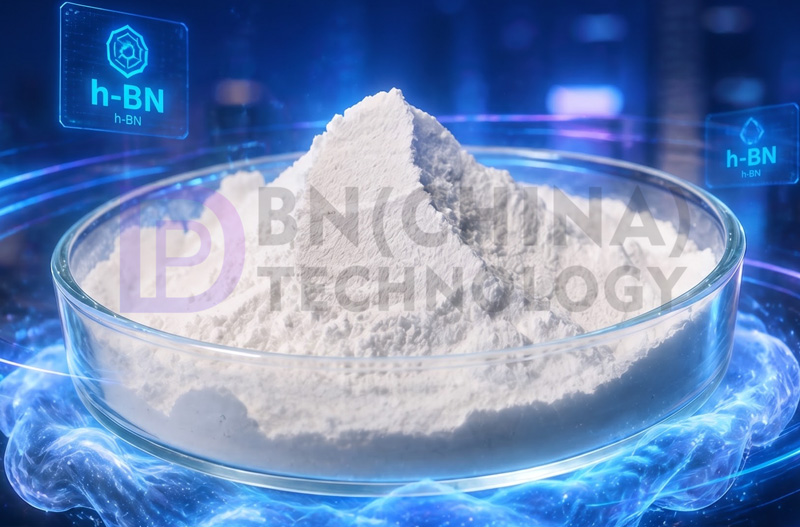
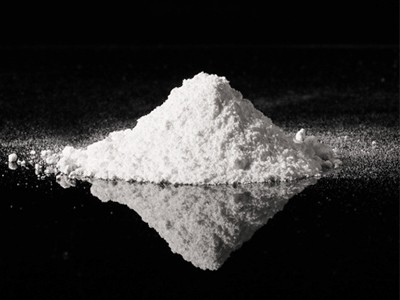
H-BN is often referred to as “white graphite” in the industry. As the name suggests, its structure is somewhat similar to graphite—it consists of layered structures where the layers slide easily against one another, resulting in excellent lubricity. However, it is a white powder, unlike the blackish graphite, making it much cleaner to use.
High-temperature resistance is its most notable feature. Ordinary lubricants, silicone oils, and even graphite-based release agents carbonize, smoke, and fail when temperatures rise. h-BN remains structurally stable in air at temperatures up to 900°C and can withstand temperatures exceeding 2,000°C in an inert atmosphere. In processes such as glass melting, metal die-casting, and titanium alloy forging—where temperatures routinely exceed 1,000°C—it can be used as a release agent that continues to function effectively at high temperatures, without losing its effectiveness as the temperature rises.
It doesn’t stick to the mold—it “doesn’t team up” with anything. h-BN is highly chemically inert; it neither wets nor reacts with most molten metals (aluminum, copper, iron, titanium, etc.), glass, or molten salts. When applied to the mold surface, it acts like a thin barrier—molten metal or glass cannot adhere to it, making demolding effortless. This is particularly evident in titanium alloy casting—titanium is highly reactive at high temperatures and is especially prone to sticking to the mold, but using a boron nitride release agent effectively prevents this problem.
Proper lubrication extends mold life. h-BN has a coefficient of friction of approximately 0.16, and unlike some materials, its lubricity does not decline significantly as temperature rises. With this lubricating film on the mold surface, metal flow resistance is reduced, forming pressure decreases accordingly, and mold wear is naturally minimized. This significantly extends the mold’s service life and saves time on mold cleaning.
Clean and residue-free. Because it is white and carbon-free, it leaves no black soot or carbon residue on the workpiece surface after demolding. It is particularly suitable for applications such as optical glass, food packaging glass, and metal parts with high surface cleanliness requirements, significantly reducing the burden of subsequent cleaning.
Boron nitride release agents currently available on the market include water-based, oil-based, and emulsified oil types; some are formulated as sprays for convenient application. They can be used in high-temperature applications such as deep bending of flat glass, glass bottle manufacturing, aluminum and copper die casting, steel continuous casting separation rings, and welding spatter prevention.